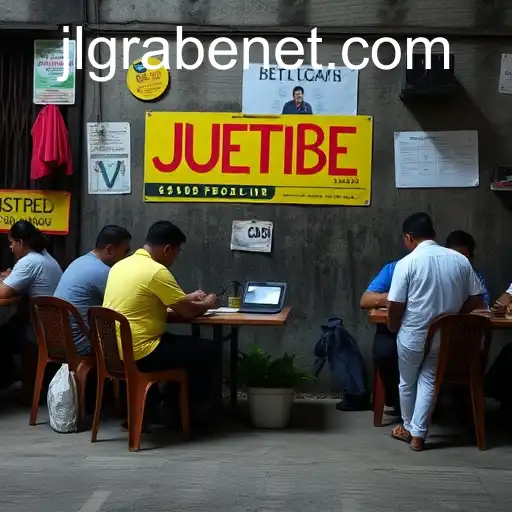
Understanding Jueteng: The Illicit Numbers Game
Jueteng is an illegal numbers game that has entrenched itself in various communities across the Philippines. Though often associated with the country's socio-economic fabric, it operates mostly in the shadows. This underground lottery has been a subject of controversy, socio-political debates, and even high-profile scandals, further complicating its notoriety in the Filipino populace.
The Mechanics of Jueteng
At its core, Jueteng is a simple numbers game. The participants choose a combination of two numbers within a range typically between 1 and 37. Bets are placed on these numbers, and the winners are determined by a random drawing. This simplicity makes Jueteng approachable for many, regardless of their social or economic standing.
The drawing process typically takes place publicly or in semi-private settings, often overseen by a group of individuals responsible for maintaining the integrity of the results. In some cases, the results are broadcasted throughout local communities or through informal communication channels. It is a game driven by minimalistic technology, relying instead on an intricate network of bettors, collectors, and controllers.
Economic Implications
Jueteng has significant economic implications in areas where it is prevalent. It is particularly popular in lower-income regions, where a small bet can promise a comparatively high return. This allure of immediate financial gain often overshadows the legal risks involved in participating in this illicit activity.
Despite its illegality, Jueteng provides economic benefits not only to its organizers and operators but also to communities where legal employment opportunities may be scarce. This underground economy can bolster local economies, albeit at the cost of remaining in a legal gray zone.
The Role of "JLGRABE" in Jueteng
"JLGRABE" often emerges as an acronym or code within the network of Jueteng operations. Understanding its local connotations and uses requires insight into the regional dialects and terminologies employed by those within the inner circle of Jueteng operators. Using such codes helps maintain a veil of secrecy, allowing the operations to continue with minimal interference from law enforcement.
This kind of coded language is critical in preventing discovery, fostering a sense of exclusivity, and protecting those involved from legal repercussions. Knowledge of such codes is usually restricted to insiders, thereby maintaining the clandestine nature of Jueteng operations.
Social and Political Dimensions
Beyond its economic role, Jueteng has a significant social and political impact. Politically, it has been at the center of numerous scandals. Politicians and local law enforcement are sometimes accused of accepting bribes to turn a blind eye to Jueteng operations. This has led to public outcry and calls for governmental reform, though tangible progress remains elusive.
On the social front, Jueteng operates as more than just a numbers game. It is a social activity that brings together various members of the community. For some, participating in Jueteng is a form of entertainment or even a tradition, passed down through generations.
Efforts Toward Regulation
Efforts to address Jueteng range from aggressive crackdowns to attempts at legal regulation. Throughout the years, different administrations have proposed various solutions, such as integrating Jueteng into legitimate lottery systems. However, these attempts often face significant pushback, coupled with challenges in monitoring and enforcing new regulations.
The dilemma persists: Jueteng remains an endemic issue, resistant to easy solutions due to its deep-seated roots in economic necessity and cultural tradition. The clandestine nature of the game complicates law enforcement efforts, requiring innovative approaches that consider both legal and socio-economic factors.
Conclusion
The challenge of addressing Jueteng lies in balancing legal enforcement with understanding its role in society. It is a complex puzzle requiring coordination between government, law enforcement, and communities. Until meaningful, sustainable alternatives are available, Jueteng is likely to endure, continuing its role both as a simple thrill and a significant socio-economic concern.